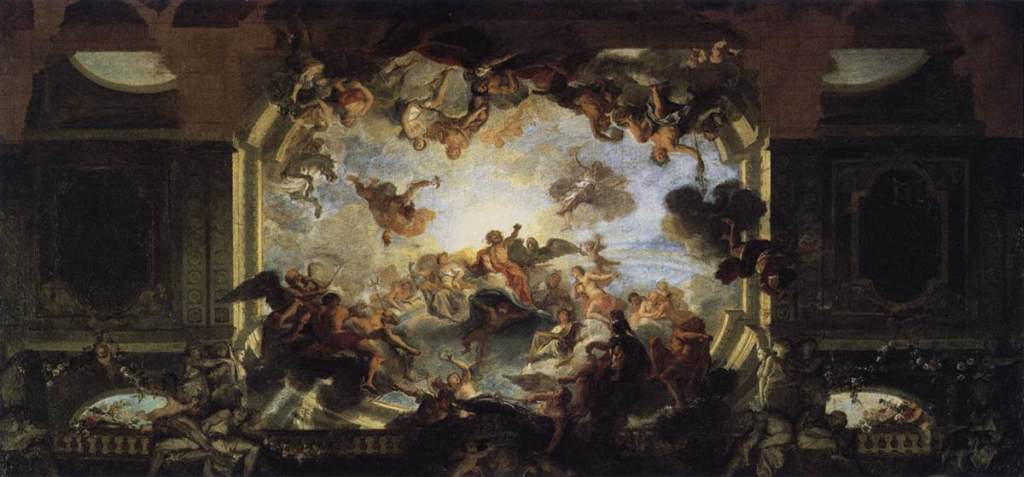
How ancient texts and modern realities point to a world governed by more than meets the eye.
By Tari R. Jackson
One of the most intriguing ideas in the Bible is the notion that nations are not merely political units or geographical boundaries. They are also spiritual territories. Each has a personality, a rhythm, a temperament—and perhaps, as Scripture suggests, an unseen steward shaping its affairs.
This idea comes to life most vividly in the book of Daniel–Chapter 10. It is one of those moments in Scripture when the curtain is pulled back for us to glimpse the strange, unseen politics shaping our world—a moment that tells us that nations are never merely nations, and history is never merely history.
For three weeks, Daniel prayed and fasted for understanding. His heart was troubled by the condition of his people and the future of the world he saw in his visions. Then, in Daniel 10:12–13, a heavenly messenger appears. He tells Daniel something astonishing–the explanation for the delay: “The prince of the kingdom of Persia resisted me twenty-one days.” This was not a human prince. No earthly official can restrain an angel.
It was Michael, called “one of the chief princes” and later described as Israel’s protective angel, who stepped in to help the messanger against the Prince of Persia.
And then comes the second shock. The angel adds:
“Now I must return to fight with the prince of Persia; and when I go forth, behold, the prince of Greece will come.”
— Daniel 10:20

The picture here is unmistakable: nations operate under both visible governance and invisible influences–spiritual overseers that shape their moral and historical direction. It was a hint that empires like the Persian, Greek and those before and after them, with all their conquests and ambitions, might have a supernatural source.
Another serious point to note is this: Daniel’s prayer was powerful enough to ripple these invisible cosmic currents. This is the Bible’s subtle way of telling us that fervent prayer, righteousness, and moral integrity are not soft virtues—they are geopolitical forces.
Daniel and the heavenly messenger isn’t our only source for the notion of spiritual princes.
Clues from Ancient Civilizations
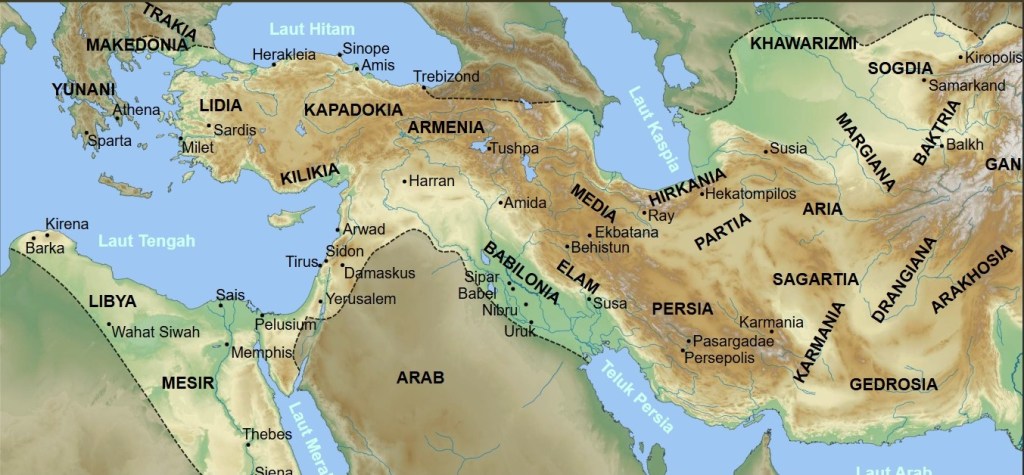
Image by Anton Gutsunaev, Uirauna, Ivan Humphrey CC BY-SA 3.0 via Wikimedia Commons
The people of Babylon, Assyria, and Persia believed each nation and city had a spiritual “patron” or “gatekeeper.” These were often depicted as winged beings beside royal palaces. Greek philosophers believed that daimons (not demons in the modern sense) guided nations and cities. Socrates claimed he had one that influenced his decisions. The Canaanites, Moabites, Phoenicians, and Egyptians all believed their nations operated under the guidance of a spiritual being or territorial deity.
Even the Old Testament acknowledges this when it says Israel should not worship “the gods of the nations”—not because they were imaginary, but because they were not Yahweh.
Yet the Bible treats the concept with a kind of sober clarity. It neither sensationalizes nor trivializes it. Instead, it folds the idea into the larger canopy that God remains sovereign, even as He permits these unseen beings to operate within set boundaries.
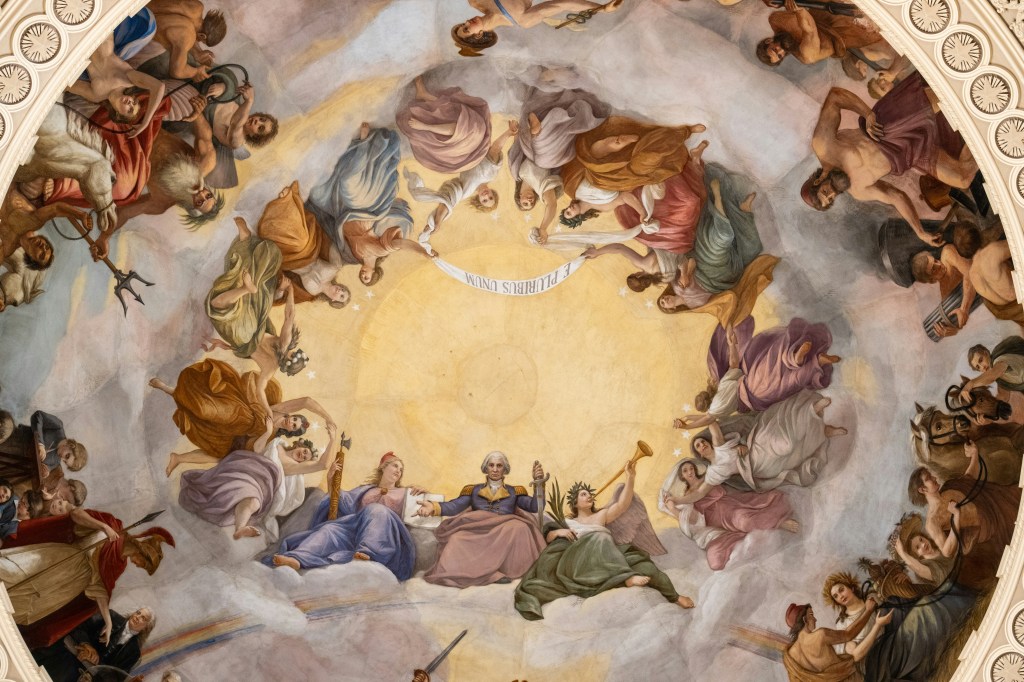
Centuries before Daniel’s encounter, Deuteronomy 32 offers a fascinating insight: when God divided the nations, He allotted them under the supervision of “the sons of God”—heavenly beings—while taking Israel as His own. Other hints at territorial spirits include passages like Ezekiel 28 which start by addressing a human ruler (the King of Tyre) but then suddenly shift into describing a spiritual being behind him—someone “in Eden,” someone “anointed,” someone who fell through pride. Biblical prophets clearly understood that behind certain kings and systems were spiritual forces shaping the behaviour of nations.
The New Testament affirms this when Paul writes: “We wrestle not against flesh and blood…” but against principalities, powers, and rulers of this present darkness. This is the same territorial language Daniel encountered. The worldview is striking but coherent: nations were spiritually assigned, and their histories unfold within that unseen structure.
What Development Economists Can See

It is intriguing how this ancient lens still resonates with what development scholars observe today. Modern development studies tell us something surprisingly close: Nations do not fail randomly. They fail because systems, incentives, norms, and mindsets reinforce certain patterns over time. A society can become trapped in a pattern, as though under the influence of an inherited atmosphere. And when reforms begin, it often feels like pushing against something larger than human resistance alone.
Where scripture sees rebellious “princes,” development economists see: entrenched corruption, destructive political culture, long-term institutional decay, inherited patterns of fear, apathy, or mismanagement, elite capture, and resistance to reform. These may not be spiritual beings, but they function with the same stubborn, territorial persistence.
Likewise, where scripture sees good angelic guardians, economists see: nations with strong institutions, moral leadership, a culture of discipline and excellence, systems that support justice and productivity, societies that “protect” their progress.
The overlap is fascinating. One speaks spiritually, the other structurally—yet both describe deep forces shaping national outcomes. This overlap doesn’t diminish the spiritual perspective; it enriches it. Scripture shows that unseen influences may operate over nations, but it also insists that human responsibility is never suspended. In every biblical case, spiritual complexity is paired with human agency.
Why This Ancient Idea Still Matters Today

Understanding spiritual princes is not about fear or superstition. It is about recognizing that:
Nations have identities. Territories carry long-standing patterns—good or bad. Some influences resist positive change. Transformation requires both spiritual and practical effort.
Daniel’s response was not panic—it was persistence, wisdom, and prayer. Ancient Israel’s response was not fatalism—it was courage, righteousness, justice, and nation-building (Nehemiah’s tenacity to rebuild the temple at Jerusalem).
In scripture, human responsibility is never removed. The unseen realm may resist change, but earthly diligence advances it.
So do spiritual princes exist? According to Scripture, yes. And according to history’s oldest cultures, they always have. But the lesson is not fear. It is awareness. Nations face battles seen and unseen, but their fate still depends on the actions, values, and decisions of their people.
In the end, whether one speaks in spiritual terms or the language of development economics, the conclusion is the same: societies rise when their people rise—when they pursue truth, strengthen institutions, build character–rejecting evil, selfishnes and mediocrity. Replacing hate with love and embracing meritocracy.
Nations rise when they refuse to let inherited patterns define their future. The unseen realm may resist progress, but human diligence, paired with spiritual wisdom, remains the most powerful force any nation can wield.
 Intelligiate


Leave a comment