By Tari R. Jackson
Let’s not kid ourselves—Nigeria is dancing dangerously close to becoming a one-party state. You may have felt it already. The ruling party seems untouchable, the opposition keeps shrinking (or being absorbed), and elections increasingly feel like formalities rather than contests. If you’re thinking, “But if they’re delivering, what’s the big deal?”—I get it. But trust me, history has a loud warning: one-party dominance never ends well.
This isn’t alarmism. It’s reality.
What Exactly Is a One-Party State?
Think of it like this: a one-party state is like a football league with only one team. Sure, they’ll always win—but at what cost? No competition means no pressure to improve, no accountability when they mess up, and no room for fresh ideas. In politics, that’s a recipe for dictatorship in disguise.
Now, Nigeria isn’t officially a one-party state. The constitution still allows opposition. But what we’re seeing—especially after the 2023 elections—is an unofficial drift in that direction. One party is stacking up victories, absorbing rivals, and dominating institutions from top to bottom. Meanwhile, the opposition is either fragmented or defecting under pressure. This isn’t new. And unfortunately, it’s not unique.
A Pattern of Power and Its Painful Consequences
Let’s take a quick world tour.
Zimbabwe under ZANU-PF is a cautionary tale. Since 1980, the party has dominated every election—often under shady circumstances. By the 2000s, the country collapsed under hyperinflation and repression. In 2008, things got so bad that then-President Robert Mugabe was forced into a power-sharing deal after contested elections and international outcry.
“If you have only one party, you end up with only one voice,” said the late Zimbabwean opposition leader Morgan Tsvangirai. “And when that voice is wrong, the whole country suffers.”
Over in Venezuela, Hugo Chávez’s PSUV turned a vibrant democracy into a one-party playground. Once the opposition was shut out, the economy collapsed, and by 2019, Venezuela had seen more than 4 million people flee the country due to economic hardship and political repression.
Myanmar is another brutal example. The military-backed one-party regime crushed dissent for decades until protests in 1988 led to mass killings. Even when democracy briefly returned, the military clawed back power in a 2021 coup. Thousands were killed or imprisoned.
And remember the Arab Spring? In Tunisia, Egypt, and Libya, people rose up in 2010–2011 against entrenched one-party regimes. The cost was immense: civil wars, repression, and political instability. But the message was clear—people don’t stay silent forever.
But What About China?
Someone always brings up China. Yes, the Chinese Communist Party has delivered serious economic growth—but it came with a heavy price: censorship, surveillance, human rights abuses, and zero political freedom.
Also, China is the exception, not the rule. Most one-party states don’t build superpowers—they build prisons of the mind. And Nigeria, with our free press (for now), diverse voices, and democratic instincts, isn’t likely to tolerate China-style governance for long.
Nigeria’s Warning Signs

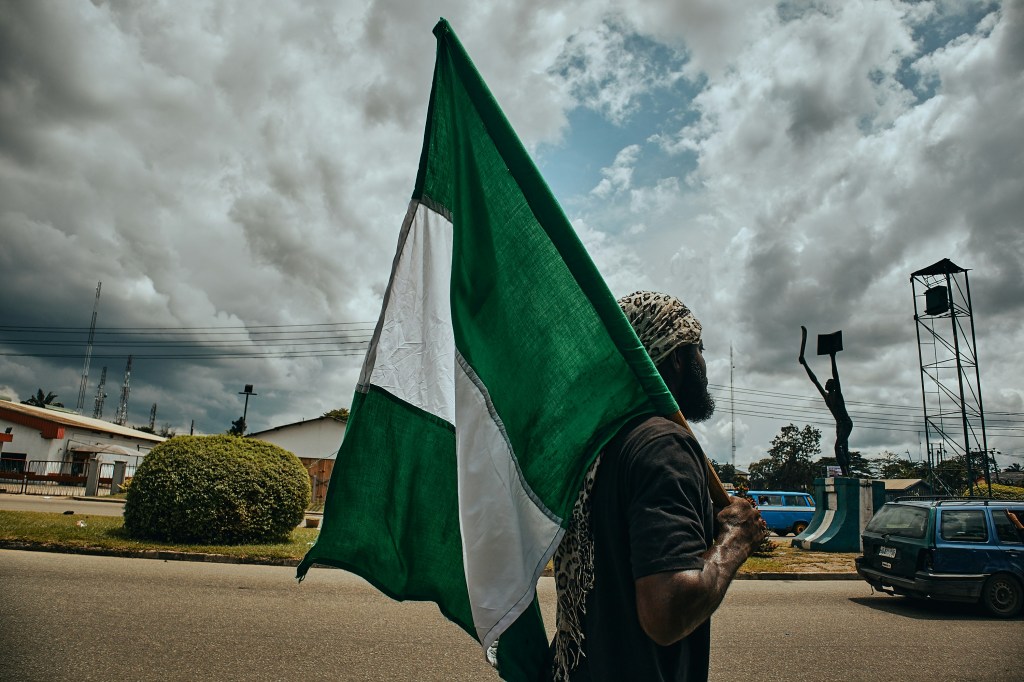
Photo by Kabusa16 – Own work, CC BY-SA 4.0, via Wikimedia Commons
Let’s bring it home. Here’s what we’re seeing in Nigeria right now:
Elections increasingly dominated by one party. Appointments and contracts handed out almost exclusively to loyalists. Unprecedented mass defections. Misplaced priorities and absence of legislative resistance to unpopular policies from the executive arm. Increasing executive overreach. Increasing deafness to public outcry over anti-people policies. Repression of protests and dissenting voices. Civil Society organizations tagged as “agents of subversion.” Increasing distrust of judiacial processes. Media outlets pressured to toe the line. Worsening insecurity and economic hardship on a scale totally alien to Nigerians. And more strange stuff unfolding even as I write this.
This is how it starts.
But opposition matters — because without competition, the ruling party has no reason to improve. Policies are poorly thought out, corruption goes unchecked, and citizens become pawns instead of participants.
Already, we see communities across Nigeria protesting the high cost of living, insecurity, and lack of services. But if no viable political alternative exists, where does that frustration go?
We all know the answer.
Democracy Needs Opponents, Not Spectators
Healthy democracies thrive on disagreement. They need back-and-forth, checks and balances, and yes—losers who live to fight another day. If the ruling party never faces a real threat of losing, it eventually starts acting like a monarchy in agbada.
Nigeria’s strength has always been in its diversity—not just ethnic or religious, but political too. That’s why the drift toward a one-party system is so dangerous. It silences voices, kills innovation, and ultimately leads to instability.
So What Can We Do?

For starters, let’s stop being okay with political monopolies. We should challenge the idea that one party “deserves” to rule forever just because it wins elections. That’s not how democracy works.
Let’s also demand more from opposition parties. They need to stop infighting, build credible platforms, and connect with real people—not just social media noise.
And finally, you and I need to stay engaged. Democracy isn’t just voting once every four years. It’s raising your voice, holding leaders accountable, and refusing to let one group speak for the entire country.
The Bottom Line
One-party dominance might seem stable—but it’s a slow death for democracy. Around the world, people have fought, protested, and even died to break the grip of one-party rule.
Let’s not wait until we’re in the same position.
Nigeria deserves better than a political monopoly. It deserves choice, accountability, and a future where power truly belongs to the people—not just the party in power.
Let’s not sleepwalk into a one-party state. We’ve seen where that road leads.
And it’s not freedom.
 Intelligiate
Leave a comment