When the Cameras turn off
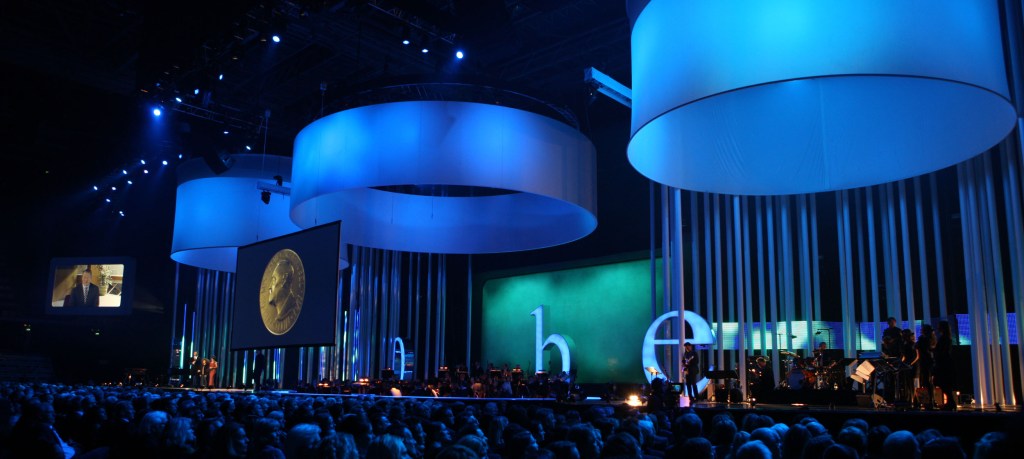
Every October, the world pauses to watch a few extraordinary people receive a solid gold medal, a handshake, a diploma and a cheque with multiple zeroes. Then the cameras fade, the orchestras stop playing, and life goes on.
But for many Nobel laureates, the story after the stage is just as fascinating as the one that got them there.
The Nobel Prize, after all, isn’t just gold and glory — it’s a question whispered to every winner: Now what will you do with it?
The Generous Ones
Some winners take that question literally — they give it all away.
Physician-philosopher Albert Schweitzer used his 1952 Peace Prize money to expand his hospital in Africa. Mother Teresa, true to form, donated every cent of her 1979 award to the poor. Mohamed ElBaradei, 2005 Peace laureate, gave his share of the prize to charity for orphaned and disabled children. And more recently, novelist Abdulrazak Gurnah directed part of his 2021 Literature Prize funds toward scholarships for young African artists.
It’s a poetic full circle — rewarded for making the world better, and using the reward to make it better still.
The Defiant Ones
Then there is the story that sound like a movie script.
When the Nazis began confiscating Nobel medals during World War II, Danish physicist Niels Bohr quietly dissolved two gold medals — belonging to German scientists Max von Laue and James Franck — in a beaker of acid. He wanted to hide them from the Gestapo.
After the war, the gold was recovered and the medals were recast. That’s not just chemistry — that’s courage meets chemisty.
The Realists
Not every story is glamorous.
In 2015, physicist Leon Lederman, who had co-discovered the muon neutrino, sold his Nobel medal to cover medical expenses — a sobering reminder that prestige doesn’t always guarantee comfort. Malala Yousafzai’s family auctioned a replica of her Peace Prize medal to raise funds for education projects for children displaced by war. James Watson (one of the discoverers of DNA’s structure) auctioned his Nobel medal in 2014 to raise money for scientific research and charity. The buyer? Russian billionaire Alisher Usmanov — who immediately returned the medal to him as a gesture of respect.
The Quiet Ones
Some laureates treat the whole thing with charming nonchalance.
Physicist Peter Higgs didn’t even know he’d won until a stranger congratulated him on the street — he doesn’t own a television. Economist Amartya Sen once said his medal was “locked away somewhere safe” because he didn’t trust himself not to misplace it.
There’s something disarming about that humility — the world crowns you, and you just shrug and go back to your books.
The Changemakers

Photo by Harry Wad CC BY-SA 3.0, via Wikimedia
For these persons, the Nobel Prize becomes a megaphone.
Maria Ressa, who shared the 2021 Peace Prize, uses her platform to champion press freedom and democracy. Kailash Satyarthi, her co-laureate, continues to fight child labour with renewed global visibility. So also several others whose post-award work continue to have great impact.
They turn the spotlight of the Nobel into a beam that lights up bigger causes — the ultimate repurposing of fame.
Why It Matters
We tend to think of prizes as endings — the final line in a story of brilliance. But in truth, the Nobel often marks a beginning. What laureates choose to do with their medals, money, and influence reveals something timeless about human aspiration: that recognition only matters if it fuels more good.
Maybe that’s the quiet challenge for the rest of us — to create a culture that doesn’t just celebrate excellence once a year, but nurtures it daily. Genius deserves more than applause; it deserves continuity. Every Nobel medal tells two stories: one of achievement – a place in history, and one of what comes after.
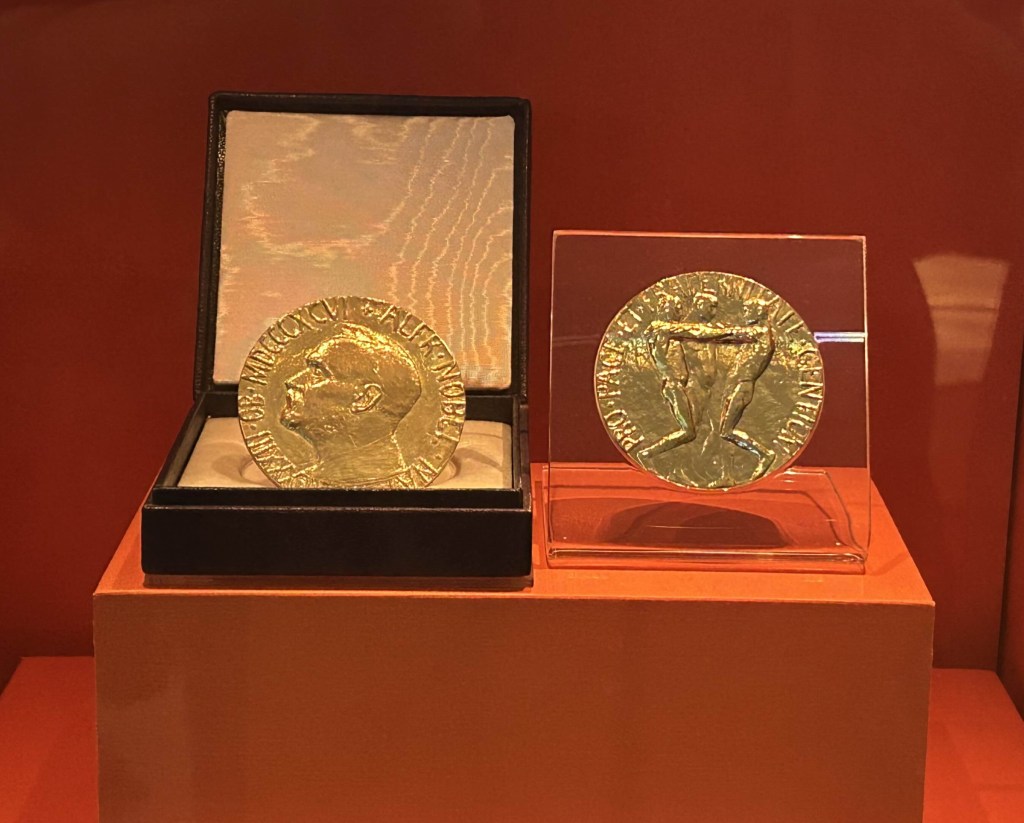
Photo by ArtemisiaGentileschiFan, Public Domain Via Wikimedia Commons
 Intelligiate

Leave a comment