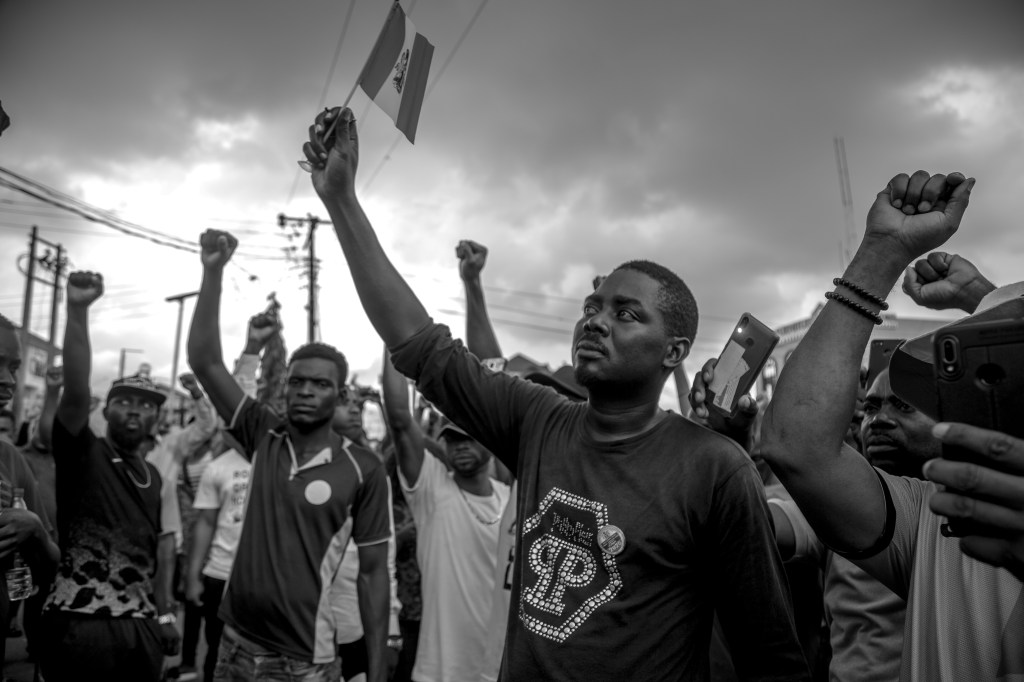
Is Nigeria Becoming an Illiberal Democracy? A look at events from 1999 to Present Day
Democracy or Its Illusion?
Since the return to civilian rule in 1999, Nigeria has been hailed as Africa’s largest democracy. Yet, over two decades later, many Nigerians are asking whether the nation is truly democratic—or merely performing the rituals of democracy while drifting toward authoritarianism.
From the manipulation of electoral processes to judicial compromise and the suppression of dissent, Nigeria increasingly exhibits features of what political scientists call an illiberal democracy: a system where elections are held, but fundamental rights, institutional checks, and civil liberties are systematically undermined.
What Is Illiberal Democracy?
Coined by political analyst Fareed Zakaria, illiberal democracy refers to a political system that holds elections but lacks the constitutional liberalism necessary to uphold civil liberties, the rule of law, and institutional independence. In such systems, democratic form is preserved, but democratic substance is eroded.
The Nigerian Trajectory: 1999 to Present
Below is a timeline of major events and warning signs pointing to Nigeria’s drift toward illiberalism.
1999–2007: Hope and Consolidation Under olusegun Obasanjo
- Return to democracy after decades of military rule.
- Creation of institutions like the EFCC (Economic and Financial Crimes Commission).
- But: The attempted third-term agenda in 2006 showed early signs of executive overreach.
2007–2015: Electoral Reforms
- Musa Yar’Adua acknowledged flawed elections in 2007 and initiated reforms before his death.
- Goodluck Jonathan’s 2011 and 2015 elections marked improvements in electoral transparency.
- 2015 peaceful transition to Muhammadu Buhari raised global hopes.
2015–2023: Shrinking Civic Space Under muhammadu Buhari
- Clampdowns on protests (e.g., the #EndSARS movement in 2020 met with deadly force).
- Twitter ban in 2021, following deletion of the President’s tweet—a major blow to digital rights.
- Accusations of judicial interference and selective anti-corruption prosecution.
- Media intimidation and shrinking press freedom.
- Militarization of elections, especially in Rivers, Kogi, and Ekiti States.
“Nigeria is fast becoming a democracy in name only,” warned a 2022 report by the Centre for Democracy and Development (CDD).
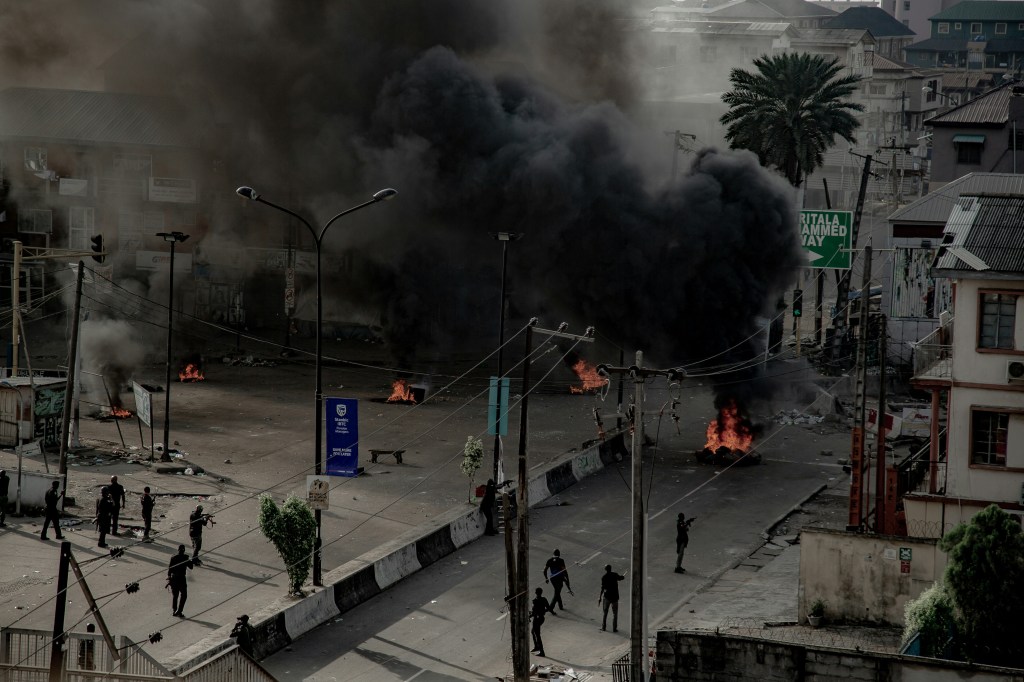
Photo credit: Ayanfe Olarinde on Unsplash
2023 General Elections: Legitimacy in Question
- The 2023 presidential election saw the victory of Bola Ahmed Tinubu, but was marred by:
- Allegations of INEC irregularities
- Low voter turnout and disenfranchisement
- Legal challenges that were dismissed despite documented anomalies
- Observers, including the EU Election Mission, noted a lack of transparency and public trust.
2023–2025: Centralization of Power Under president bola AHMED Tinubu
- Civil society groups report rising intimidation, digital surveillance, and decreased civic freedom.
- National Assembly’s perceived rubber-stamp behavior, rarely challenging executive directives leading to accusations of legislative puppetry.
- Growing perception of a “strongman presidency”:
- Removal of opposition voices from public office.
- Increased use of executive orders, bypassing legislative debate.
- Interference in subnational governance—notably in Rivers State, where the elected Governor and the state’s House of Assembly were suspended amid political standoff, and a Tinubu-appointed sole administrator assumed control on March 18th, 2025. Many within and outside the state criticised the President’s decision. They were unanimous in saying the situation in Rivers State did not not meet the conditions for the extraordnary declaration of State of Emergency as enumerated in the Nigerian constitution (Section 305).
- Though his stated mandate was to restore calm and resolving the feud between the suspended governor Siminalayi Fubara and his predecessor Nyesom Wike and his loyalist members of the state’s House of Assembly, the Tinubu-appointed Sole-Administrator was rather given powers to dissolve statutory boards and appointing Local Government sole-administrators. He also went on to defend a questionable fiscal budget for the state which was presented to the National Assembly by President Tinubu himself.
- Amidst widespread calls for a return to democratic norms in Rivers Stete, President Tinubu modified certain sections of Rivers State electoral laws – specifically suspending Section 2 Subsection 2 of the Rivers State Independent Electoral Commission (RSIEC) Law Number 2 of 2018. This unilateral modification of law made in the federal government’s official gazette published on July 22, 2025, conferred unprecedented powers to the sole-administrator to appoint the Chairman and members of RSIEC. The gazette also effectively empowers the sole-administrator to conduct local government elections and to handle related petitions and litigations.
- Waves of defections by lawmakers and governors from opposition parties to the ruling party – All Progressives Congress {APC):
- Despite constitutional provisions (Section 68(1)(g) of the 1999 Constitution) meant to curb arbitrary party-switching, no defecting elected official has been handed the penalty of vacating their seats. This further betrays trust in the independence of the judiciary and the Independent National Electoral Commission (INEC).
- Though these defections encourage a culture of opportunism over ideology, eroding opposition strength and betraying the electorate, none of the defectors has apologised or acknowledged the negative impact of their actions.
Prebendal Politics and Elite Capture
Richard Joseph coined the term prebendalism to describe Nigeria’s political culture: where public office is used as personal property to reward loyalists rather than serve citizens. Corruption flourishes, not in spite of democracy—but through its institutions. This has hollowed out merit-based governance, making democracy appear more like a vehicle for elite domination than public service.
Professor Adebayo Olukoshi bluntly notes:
“Democracy becomes meaningless when its tools are used to entrench authoritarian rule.”
A Tilt Toward One-Party Dominance?
With a weakened opposition, a judiciary often seen as compromised, and a growing number of defections, Nigeria risks becoming a de facto one-party state. Yascha Mounk refers to this as “democratic backsliding”—where institutions remain in place, but their purpose is gutted.
The APC’s consolidation of power, unchecked by viable opposition or strong institutions, resembles autocracy more than democracy.
Is Nigeria an Illiberal Democracy?
While Nigeria still holds periodic elections, the erosion of democratic institutions, weakening of civil liberties, and centralization of power point clearly toward illiberal tendencies.
“A democracy without rights and rule of law is like a house built on sand—it can collapse any time,” notes constitutional scholar Ayo Ajomo.
The signs are not just abstract—they affect Nigerians’ everyday lives, from deepening poverty, worsening insecurity, curtailed freedoms to distrust in institutions. Is Nigeria becoming an illiberal democracy? All evidence suggests it’s already well along that path. However, the outcome is not predetermined. The resilience of Nigeria’s civil society, youth activism, investigative journalism, and judicial reform efforts remain vital guardrails against full-blown authoritarianism.
Can Democracy Be Saved—or Reimagined—in Nigeria?
Despite its distortions, democracy in Nigeria still offers the most peaceful path to reform—if it can be protected and refined.
Winston Churchill once said:
“Democracy is the worst form of government—except for all the others that have been tried.”
Steps Toward Democratic Renewal:
- Enforce anti-defection laws to curb political opportunism.
- Protect state autonomy and prevent federal overreach.
- Rebuild judicial independence and depoliticize INEC.
- Creating a truly independent EFCC.
- Protect civic space and free expression.
- Foster literacy in the spheres of governance, economics and rights so citizens can demand accountability.
- Legislation to make in-person aptitude tests and pre-election debates mandatory for electoral candidates.
- Most crucially, exploring reform models already in practice around the world – and adapting democratic innovations fitting for Nigeria’s peculiarities.
AT A DEMOCRATIC CROSSROAD
Political scholar Jideofor Adibe observes:
“What we have is a democracy where the people vote but do not necessarily choose.”
To preserve the soul of its democracy, Nigeria must move beyond elections and renew its commitment to accountability, inclusion, and constitutional order. With persistent civic action and institutional reform, Nigeria can move from symbolic democracy to one rooted in justice, participation, and public trust.
 Intelligiate
Leave a comment